Antecedentes - Antecedents
Bandera - Flag
Escudo de Armas - Coat of Arm
Himno - Anthem
Antecedentes
El Municipio Libertador está ubicado en el Centro Norte de Venezuela y limita al Norte con el estado Vargas; al Sur y Oeste con el estado Aragua y al Este con el estado Miranda. Recibió su nombre como tributo a El Libertador Simón Bolivar: máximo héroe de la Independencia de Venezuela y Latinoamérica. Su capital, la ciudad de Caracas, lo es también de la República. Actualmente comprende un Distrito Metropolitano que abarca no sólo el Municipio Libertador sino cuatro municipios del estado Miranda: Baruta, Chacao, El Hatillo y Sucre, según establece la Gaceta Oficial Nº 37.006 de fecha 03 de Agosto de 2000. Cabe mencionar que "Distrito" es una palabra latina que proviene de "destrictus" que significa "contenido". "CARACAS" es la palabra empleada por las tribus aborígenes que poblaron las regiones costeras al Norte de la primitiva Venezuela para distinguir una planta autóctona llamada "Amaranto" en otras partes del mundo y que constituyó una de sus principales fuentes alimenticias. Cuando los conquistadores españoles llegaron a estas tierras vieron que los naturales ingerían esta planta y luego de intentar averiguar su nombre por medio de gestos y mímicas, uno de ellos pudo entender las preguntas de tan extraños personajes y levantándose dijo: "CARACARA, CARACAS", "CARACARA", "CARACAS" mientras agitaba un manojo de estas hierbas al mismo tiempo. En algunas ocasiones, fue costumbre entre los conquistadores españoles asignar un nombre extenso a las ciudades y pueblos que fundaban durante los primeros tiempos de su dominio sobre Latinoamérica. Sin embargo, componían tales nombres combinando voces autóctonas con otras tomadas de Santos Patronos, lugares o dignatarios de aquellos tiempos. Conforme reza la tradición, el Capitán Diego de Lozada y Osorio fundó la Ciudad de "Santiago de León de Caracas" el 25 de Julio de 1567 en el mismo lugar donde hoy se erige la "Plaza Bolívar", entonces llamada "Plaza Mayor". Posteriormente se le concedieron títulos y preeminencias a la Ciudad enriqueciendo su nombre hasta completarlo así "La Grande, Muy Noble y Muy Leal Señoría de la Ciudad Mariana de Santiago de León de Caracas". En este caso, "Mariana" quiere decir "devota de la Virgen María".
- Fuentes: - "Historia de Caracas". Rafaél Rivero Oramas y Nicolás León. Ediciones K-listo, C.A.
Electricidad de Caracas, 1967.
Libertador (Liberator) Municipality is located on the Center North of Venezuela and limits to the North with Vargas State, to the South and West with Aragua State and to the East with Miranda State. Receives its name as tribute to El Libertador Simón Bolivar: the gratest hero of the Venezuelan and Latin American Independence. Its capital and of the Republic is the city of Caracas. Actually integrate a Metropolitan District with four Municipalities of Miranda State: Baruta, Chacao, El Hatillo and Sucre as establishes Official Bulletin Nº 37.006 dated on August 3rd, 2000. May be useful to mention that "District" is a Latin word derived from "destrictus" which means "contain".
"CARACAS" is the word used by the aboriginal tribes which lived on the north coastal regions of the earlier Venezuela, for named an autochthonous kind of a plant called "Amaranth" in another places of the World. Besides, this plant was one of their principal sources of nutrition. When the Spanish conquerors arrive to these lands, they find the tribes eating it. After their inquires by words and mimics about the name of the plant, one of the aboriginal could understood the questions of these rare men and standing up, saying "CARACARA, CARACAS", "CARACARA, CARACAS" and fluttering a bundle of that herbs at the same time.
Sometimes, the Spanish conqueror's custom was bringing a large name to the cities and towns, which they founded during the earlier times of their dominion over Latin America. However, they composed these names with autochthonous voices in combination with others takes of Spanish holy sponsors, places or authorities at that times.
According to the tradition, on July 25th, 1567, the Captain Diego de Lozada y Osorio founded the City of "SANTIAGO DE LEON DE CARACAS" (Saint James of the Lion of Caracas), in the same place where exist today the "Plaza Bolívar" (Bolivar Square), then called "Plaza Mayor" (Major Square). Subsequently, the city received titles and pre-eminences enriching its name until complete as this way: "La Grande, Muy Noble y Muy Leal Señoría de la Ciudad Mariana de Santiago de Léon de Caracas" (something like "The Great, Most Noble and Most Loyal Seignory of the Marian City of Saint James of Lion of Caracas"). In this case, "Mariana" (Marian) has the meaning of "Devout of Virgin Mary".
- Sources: - "Historia de Caracas" (History of Caracas). Nicolás León. Ediciones K-listo, C.A.
Electricidad de Caracas, 1967.
La Bandera
Atributos y Semiología
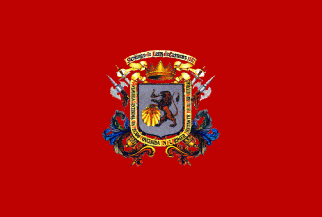
La Bandera de Caracas presenta una proporción vexilológica aproximada 2:3; esto es, cuadrado y medio de largo. Sobre su campo rojo burdeos o carrubio resalta al centro la versión del Escudo de Armas de la Ciudad vigente desde la década de 1980. El rojo, reminiscencia del color predominante en los pendones reales de la Caracas Colonial, recuerda la sangre derramada por los caraqueños a favor de la Independencia y los más altos Ideales de la Nación Venezolana.
- Reseña Histórica
El diseño original de la Bandera de Caracas apareció en la década de 1980 y consistía en un paño rojo burdeos o carrubio con la versión del Escudo de Armas adoptada entonces y aún vigente emplazada a la altura del cantón. A partir de 1994, aproximadamente y presumiblemente como resultado del cambio de autoridades municipales, se decidió colocar el Escudo caraqueño ligeramente aumentado de tamaño al centro del campo, configuración que mantiene en la actualidad.
- Fuentes: Material suministrado por la Municipalidad de Caracas, año 2000.
The Flag
The Flag of Caracas presents an approximate ratio 2:3; this is, square and half of length. Over its burgundy red field rebounds on the center the version of the Coat of Arms of the City effective since the decade of 1980. The red field, remembrance of the predominant color in the royal pennants of Colonial Caracas, symbolizes the blood spilled by Caraquenian people in favor to the Independence and the highest Ideals of the Venezuelan Nation.
Historical Synthesis
The original design of the Caracas' Flag appeared in the decade of 1980 and consisted of a burgundy red cloth with the version of the then adopted and still effective Coat of Arms located to the canton. Later 1994, approximately and presumably as a result of the change of municipal authorities, it was decided to place the Caracas CoA slightly increased of size on the center of the field, configuration which maintains at the present time.
- Sources: Material provided by Caracas Municipality on the year 2000.
Escudo de Armas
- Atributos
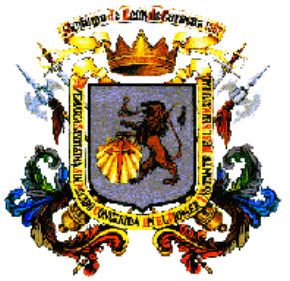
El escudo de Armas caraqueño consiste en un campo hispánico simple de Plata, que trae un león pardo rampante que sujeta con sus zarpas una venera en Oro (amarillo) cargada con la Cruz de Santiago Apóstol en Gules (rojo), el todo exornado con un coronel de cinco puntas en Oro como timbre; dos espadas de caballería antigua, dos alabardas, dos cañones y lambrequines policromáticos acolados o puestos tras el campo en sotuer (aspa) como sostenes y dos listeles de Oro: el primero a la cimera que como voz de guerra carga el nombre con el que se fundó la Ciudad "SANTIAGO DE LEÓN DE CARACAS" y el año de este acontecimiento "1567", mientras el segundo entorna el campo y carga la divisa "AVE MARÍA SANTÍSIMA SIN PECADO CONCEBIDA EN EL PRIMER INSTANTE DE SU SER NATURAL". Todas las inscripciones han sido realizadas en letras románicas de Gules (rojo) y Sable (negro).
- Semiología
El significado del Escudo de Armas de Caracas es sencillo debido a que se le califica heráldicamente como "Armas Parlantes"; esto es, expresa en sí mismo lo que representa: la venera dorada recuerda al Apóstol Santiago, uno de los Santos Patronos de España y particularmente, de la Caballería Hispánica; el León alude a España y al Reino de León donde nació el Conquistador Diego de Lozada y Osorio, fundador de la ciudad e igualmente es un homenaje a Pedro Ponce de León, Gobernador español de la entonces Provincia de Venezuela quien suministró los recursos para llevar a cabo exitosamente la conquista de la región donde actualmente se asienta Caracas. El campo de Plata simboliza la Integridad. El coronel de cinco puntas recuerda la Nobleza y la Lealtad; por una parte y por la otra constituye un tributo a la indómita tribu de los Caracas, emparentada con la gran nación Caribe, que legó su nombre a la ciudad. Los cañones, espadas y alabardas recuerdan el Coraje del pueblo caraqueño cuyo ejemplo de valor siempre ha sido referencia obligatoria para otros pueblos de Venezuela y Latinoamérica. Los lambrequines simbolizan la hidalguía y la austeridad. La voz de guerra recuerda el nombre y año de fundación de la ciudad, mientras que la divisa exalta su profunda devoción por la Santa Madre de Dios.
- Reseña Histórica
El rey español Felipe II concedió a la Ciudad su primer Escudo de Armas gracias a las negociaciones realizadas por Don Simón de Bolívar, llamado "El Viejo", sexto ancestro de El Libertador Simón Bolívar: el más grande e ilustre héroe nacional. Las Armas Primitivas sólo traían sobre campo de Plata un león pardo rampante sosteniendo una venera de Oro cargada de la Cruz de Santiago en Gules (rojo). Pocos años después fueron enriquecidas con un coronel de cinco puntas o corona de reino antiguo en atención a la antigua norma heráldica hispana mediante la cual se establecía que los Escudos de ciudades y poblaciones de los Reinos de Indias (América) podían ostentar este timbre si en el período anterior a su conquista habían sido asiento de alguna tribu indígena y por consiguiente, constituye un tributo a la indómita tribu de los Caracas, epónima de la ciudad. Posteriormente se añadieron también los trofeos de guerra (cañones, espadas y alabardas) en consideración a los notables servicios prestados a la Corona Española por sus súbditos. Mediante Real Cédula fechada el 15 de Marzo de 1766, el rey Carlos III concedió además al Escudo de Armas de la ciudad un gallardete contentivo de una divisa que exaltaría en lo sucesivo la profunda devoción de los caraqueños por la Santa Madre de Dios "AVE MARÍA SANTÍSIMA SIN PECADO CONCEBIDA EN EL PRIMER INSTANTE DE SU SER NATURAL". La actual versión del Escudo caraqueño, obra del artista plástico Efraín López, está vigente desde la década de 1980 e incluye también lambrequines policromáticos y un gallardete que a modo de cimera trae el nombre con el que se fundó la Ciudad y el año en el que esto tuvo lugar. Cabe mencionar que es el Escudo de Armas de Dominio más antiguo de Venezuela.
- Fuentes: "Los Símbolos Sagrados de la Nación Venezolana", Francisco Alejandro Vargas.
Ediciones Centauro, Caracas - Venezuela, 1981.
Coat of Arms
- Attributes
The Caraquenian Coat of Arms consist in a simple Hispanic shape enameled in Argent, presenting a rampant lion in Brown that holds with its claws an Or (yellow) scallop charged with the Saint James’ Cross in Gules (red), all embellished with a five-pointed coronet in Or (gold) as crest; two old cavalry swords, two halberds, two canons and lambrequins as supports and two golden pennants: the first as “war voice” over the crest loads the name with which was founded the City “SANTIAGO DE LEON DE CARACAS “(“Saint James of Lion of Caracas”) and the year of this event “1567”, while the second surrounds the field and loads the motto “AVE MARIA SANTÍSIMA SIN PECADO CONCEBIDA EN EL PRIMER INSTANTE DE SU SER NATURAL” (“God Bless You Holiest Mary without sin conceived in the first instant of Her Natural Being”). All the inscriptions has been realized on roman capital letters enameled on Gules (red) and Sable (black)
- Semiology.
The enamels of the quarters are a tribute to the Venezolanity. On the First Quarter, the tower represents the towers on Zapara Island and the Castle on San Carlos Island which have defended since old times the entrance to the Lake, symbolizing the strength which characterizes the Zulian people at the time of defending its civic rights. On the Second Quarter, the flash remembers the natural phenomenon well-known as "Rayo del Catatumbo" (Catatumbo's Ray) alluding to the perennial and ardent love that the inhabitants of the region profess to the intellectual manifestations; on the one hand and by the other, its nine lines symbolizes the nine districts which originally divided the state. On the Third Quarter, the boat represents the navigation and the lacustrine commerce since colonial times have been genuine industrial activities of the region. The sun at the west indicates the geographic situation of the State: the West of Venezuela. The banana tree leaf remembers the fertility of the territory whereas the one of coconut palm alludes to the glory of the heroes of the Independence of Venezuela. The ephemeris respectively remember the date in which the Conqueror Alonso de Ojeda discovers the Lake of Maracaibo and the date in which the Province of Maracaibo adheres the Cause of the Independence of Venezuela.
- Historical Synthesis:
The Spaniard King Felipe II (Philippe II) granted to the City its first Coat of Arms by means of negotiations realized by Don Simón de Bolivar, called “El Viejo” (The older), sixth ancestor of El Libertador Simón Bolívar: our greatest and illustrious national hero. These arms only show an Argent (silver) field charging a brown lion rampant subjecting a golden scallop with a St. James Cross enameled in Gules (red). Few years after it was enriched with a five-pointed coronet or old kingdom’s crown in attention to the old Hispanic heraldical norm by means of which it was established that the Coat of Arms of cities and populations of the Kingdoms of the Indias (America) could show this crest timbre if in the previous period to its conquest it had been seat of some indian tribe and therefore, constitutes a tribute to the untamable tribe of Caracas, eponimous of the city. Later were added also the war trophies (cannons, swords and halberds) in consideration to the notable services of its subjects to the Spaniard Crown. By Royal Schedule signed on March 15th, 1766, king Carlos III (Charles III) granted to the Coat of Arms of the city a pennant with a motto which express the deep devotion of the Caraquenian people for the Holy Mother of God: “AVE MARIA SANTISIMA SIN PECADO CONCEBIDA EN EL PRIMER INSTANTE DE SU SER NATURAL” (God Bless You Holiest Mary conceived without guilt in the first instant of her natural being). The current version of Caracas’ Coat of Arms, made by the Venezuelan plastic artist Efrain Lopez, is effective since the 1980’ decade and also includes lambrequins with many colors and a pennant over the crest charging the name with which the City was founded and the year of this event. In addition, this is the oldest territorial Coat of Arms of Venezuela.
- Sources: “Los Símbolos Sagrados de la Nación Venezolana” (“Sacred Symbols of the
Venezuelan Nation”), Francisco Alejandro Vargas. Ediciones Centauro,
Caracas - Venezuela, 1981.
Himno Regional - Regional Anthem
Letra: José Enrique (“Chelique”) Sarabia
- "Historia de Venezuela". Ediciones la Salle, 1969.
- Diccionario Enciclopédico de Historia de Venezuela. Fundación Polar.
- Material suministrado por la Municipalidad de Caracas, año 2000.
-Portal Aldea Educativa, www.aldeaeducativa.com/
Antecedents
- "Historia de Venezuela" (History of Venezuela). Ediciones la Salle, 1969.
- Diccionario Enciclopédico de Historia de Venezuela (Encyclopedic
Dictionary of History of Venezuela). Fundación Polar.
- Material provided by Caracas Municipality, year 2000
-Web Site Aldea Educativa,
www.aldeaeducativa.com/
Material suministrado por la Municipalidad de Caracas, año 2000.
Material provided by Caracas Municipality on the year 2000.
Musica: Tiero Pezzuti
CORO
Ciudad primaveral
valle de sol, canto de paz
voz de rebelión
y cuna de la libertad.
I
La cruz de su pendón
pueblo mestizo y flor de lis
como un león un día de abril
prendió la llamada del crisol.
II
La fé, como guardián
del cabildante corazón
vió la libertad
que se asomo desde un balcón.
III
El gran acontecer
de jueves santo se vistió
y el grito de revolución
fue como el nuevo amanecer.
IV
Y la barbarie sucumbió
bajo la luz de la razón.
Porque Caracas el ejemplo dió
bajo el amparo del Señor.
V
Santiago de León
tierra del indio y la neblina
que al Ávila ciñó
con el blasón de la heredad.
VI
Caracas colonial
la cuna del libertador
será por siempre orgullo del país
por su heroísmo y su valor.
Y su pueblo será
estandarte de honor.
Himno del Distrito Capital
Letra: Rafael Lombano Salas
Musica: Pedro A. Ramos Rangel
CORO
Ruge el león del escudo y su voz,
cual campana de la libertad,
resonando en el ámbito patrio,
eco inmenso en el pueblo encontró.
Ruge el león, y su épico acento
vendaval es, que aterra tiranos.
I
Y ese león es Caracas procera,
de Bolívar, nodriza gloriosa,
la que ejemplos heroicos nos diera,
la que heroicos ejemplos nos da.
II
Y ese león del escudo y su voz
cual campaña de la libertad,
resonando en el ámbito patrio,
eco inmenso en el pueblo encontró.
Actualización: Octubre 2003
RJArt'2003
VOLVER / BACK
