Last modified: 2026-06-13 by martin karner
Keywords: vexillological terms |
Links: FOTW homepage |
search |
disclaimer and copyright |
write us |
mirrors
On this page:
Please note that, unless referring to a plain cross this term is always accompanied by a further
description, for example a "cross crosslet fitchy". 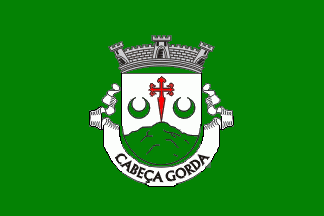
Flag of Cabeça Gorda, Portugal;
Example;
Flag of Bernissart, Belgium
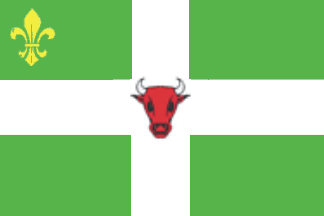
Flag of Nijland, The Netherlands

Flag of Flintshire, Wales
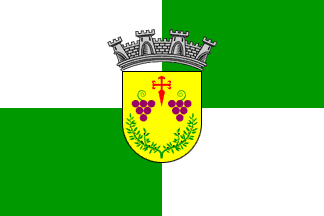
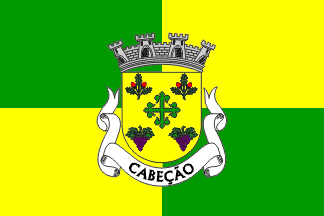
Flag of Azeitão, Portugal
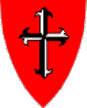
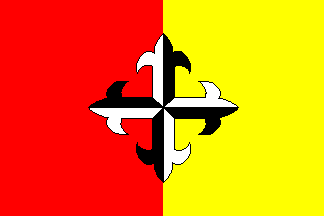
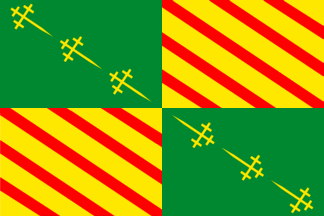
Example; Flag of Aldeanueva de Santa Cruz, Spain

Civil Ensign, Guernsey
.gif)
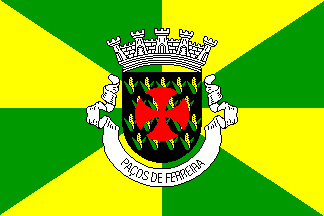
Arms and Flag of Paços de Ferreira, Portugal
Please note that, unless dealing with a Greek cross (a straight-sided cross with arms of equal length),
this term should never be used alone, but always with the type involved – for example a "cross
pattée fourché" or "Latin cross fourché" as illustrated above.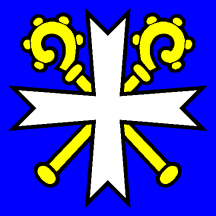
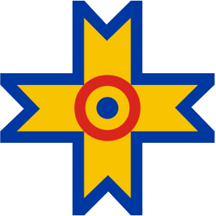

Flag of Frauenkappelen, Switzerland;
Aircraft Marking 1941–44, Romania;
Flag of Faido, Switzerland
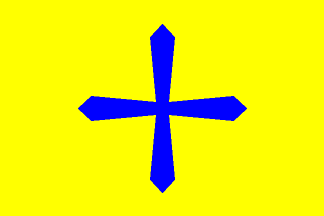
Flag of La Tallada d'Empordà, Spain
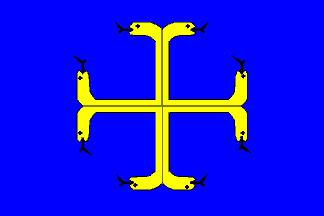
Former Flag of Sittard, The Netherlands
Notes
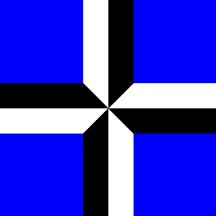
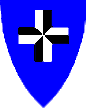
Flag of Safiental commune, Switzerland;
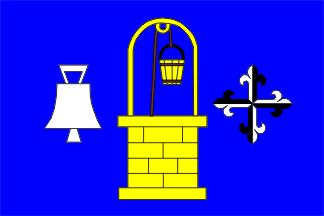
Example; Flag of Studnice, Czechia
a) Unless describing a plain cross throughout, this term should always be accompanied by a further
description, for example a "cross fleury gyronny couped".
b) A cross whose centre is obscured by a charge could be described as either a cross gyronny or a
cross-counterchanged, however, the term ‘cross quartered’
has now come into use.

pant.gif)

National Flag, Arms and
Ensign of Switzerland
17-21.gif)
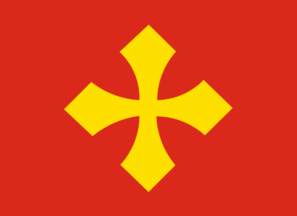
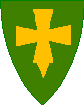
Arms and Flag of Verdal, Norway
hv.gif)
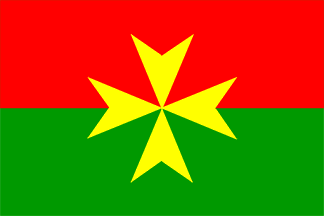
Flag and Arms of Hvozd, Czechia

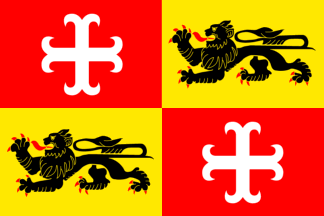
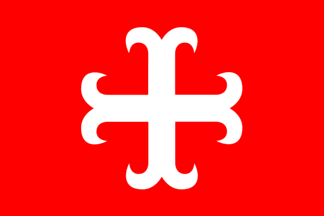
Flag of Houlle, France;
Flag of Aalter, Belgium;
Flag of Chapelle-lez-Herlaimont, Belgium
Introduction | Table of Contents | Index of Terms | Previous Page | Next Page

.gif)